

Find Your Kids Activity
Find Your Kids Activity
Your search results
Kids posters: Reflecting Your Child’s Personality and Hobbies
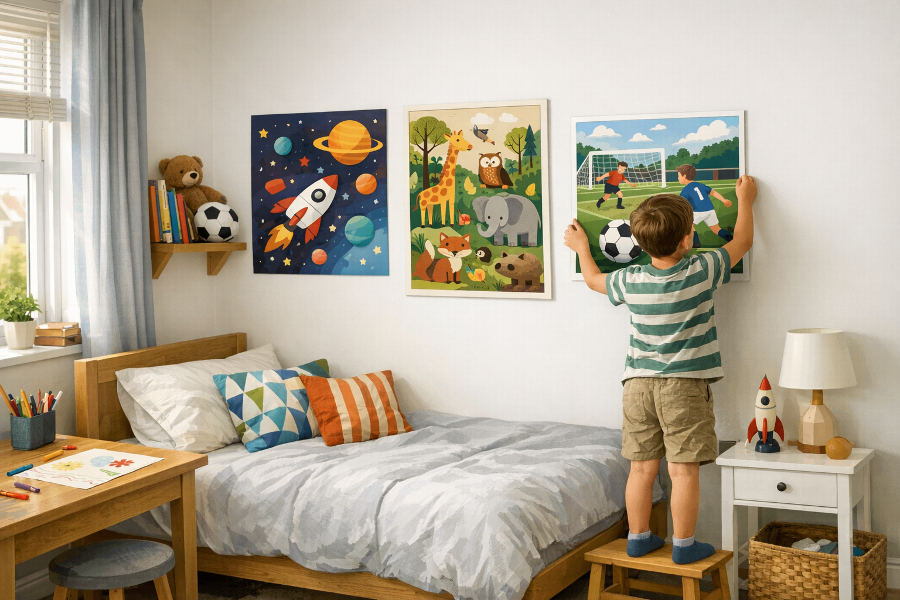
Kids posters can do more than fill a blank wall. They can show a child’s hobbies, favourite stories, and the activities that shape their week. When a room reflects those interests, it often feels more like a safe base.
The best results usually come from small choices made with care. A busy wall can feel exciting at first, but it can also add to noise in a small room. With a few smart decisions, posters can stay personal and calm at the same time.
Make wall art feel like them
A child’s room is one of the first places where personal taste can show. Choices that connect to identity often matter more than adults expect. That is why it helps to balance freedom with gentle guidance.
Kids posters that show real interests
Research on motivation suggests that heavy control over big identity choices can knock confidence. Room themes sit in that identity space, so a child-led choice can work well. Even in small bedrooms, children often reshape space with small objects, so posters can help them claim a corner.
A simple method is to choose a theme and offer three or four good options. Online, there are numerous collections of posters to choose from. For example, you can see inspirational posters for kids at Posterstore.co.uk and select options that match your preferences. After a choice has been made, asking why a picture is important can spark wonderful stories and create a closer connection.
A calmer wall helps focus
A large UK study that followed 13,774 children found that home organisation and visual chaos were linked to self-regulation from ages 3 to 7. Calmer, more predictable rooms supported better emotional control and growing independence. That is a strong reason to avoid wallpaper-like collages in sleep or homework zones.
Background reading on the cohort behind that work is available in an overview of the Millennium Cohort Study from the Centre for Longitudinal Studies. In practice, kids posters look best when each one has space to breathe. The wall still shows personality, but it does not shout.
Limit the display to a small set, then rotate pieces later for variety. Repeat one or two colours across prints, so the wall looks planned. Keep the area near the bed and desk simpler than the play area.
Posters for kids that can change
Theme choices often work best when they match current hobbies. Popular looks include space, jungle, underwater, and minimalist Scandinavian styles. Many parents now use nature-inspired colours and add a calm corner, with one strong picture as the focus.
Age also makes a difference in what feels right. Simple space activities can spark curiosity even in preschoolers. For ages 0 to 4, soft shapes and gentle characters suit many rooms, and newborns can benefit from high-contrast black-and-white prints. For ages 5 to 8, maps, solar systems, and animal charts can last into secondary school, while older children often prefer hobby-led walls. A small annual refresh can keep the room feeling current without constant change.
Hang art at the child’s eye level, so the wall feels like it is for them. Use secure fixings and shatterproof frames, especially for toddlers. Choose removable options in rented homes, so themes can change easily.
FAQ parents ask about posters
Are kids posters best chosen by the child?
Yes, kids posters are best chosen by the child. A small set of options can support motivation and confidence.
Do children posters need to be swapped out every few months?
No, children posters do not need to be swapped out every few months. A calm base with occasional updates usually works better.
Do posters need to match a full room theme?
No, posters do not need to match a full room theme. One clear interest can be enough to make the space feel personal. This approach also makes it easier to refresh the wall as tastes change.