

Find Your Kids Activity
Find Your Kids Activity
Your search results
How to Build Math Confidence in Kids from Preschool
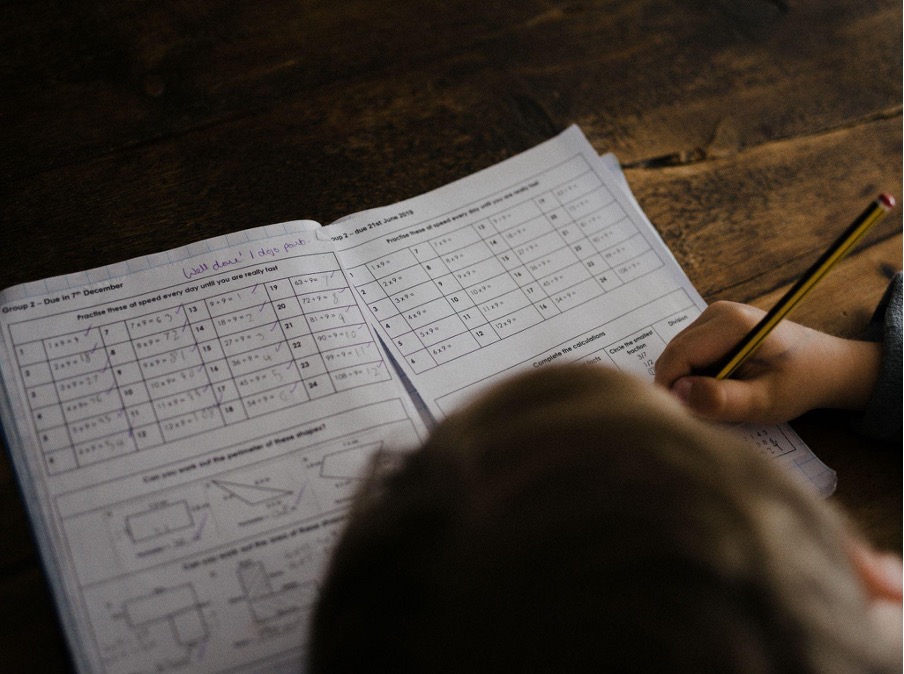
How to Build Your Child’s Math Confidence Starting from Preschool
Math confidence in kids doesn’t start when your kid goes to school. Long before your child sits down for a formal lesson, they’ve already been absorbing the building blocks of math through the world around them for some time. Babies notice patterns, toddlers sort toys, and preschoolers count snacks and steps. All of these are forms of early math, and just like these examples, building math confidence in kids is less about drilling facts and more about helping them feel capable, curious, and unbothered about mistakes.
To set your preschooler on a successful math track, you don’t need to teach them math in a formal way. The strongest foundation often comes from everyday play, simple routines, and calm conversations that help your child see numbers, shapes, and problem-solving as a normal part of life.
Math Starts Before School: What Early Play Is Really Teaching
Even before children learn addition, subtraction, or fractions, they already notice that math makes sense. This manifests itself as an intuitive feel for quantity, size, and pattern. When your baby reaches for the bigger cookie, fills and empties a cup over and over, stacks blocks from biggest to smallest, they’re building early math skills for babies and toddlers without anyone calling it math.
These moments may look ordinary, but they are helping your child develop what educators call number sense. When your toddler gives one cracker to each stuffed animal, they are exploring one-to-one matching. When a preschooler lines up toy cars by color or size, they are practicing sorting and comparison.
Daily routines are full of early math opportunities you can use. During bath time, your kid can count bath toys, compare which cup holds more water, or notice which objects float and sink. At meals, gently ask them to count blueberries, match cups to plates, or divide crackers between family members.
Play also introduces shapes and patterns naturally. Blocks, puzzles, stacking toys, shape sorters, and pretend play all help young children notice differences, make predictions, and solve small problems. Once your child notices the “red-blue-red-blue” pattern in a picture, they are already building the logical thinking and pattern-recognition they will need in school math a lot later on.
The most important part is how the experience feels, because this will shape how your kid feels around numbers later on. If you introduce math as something playful, useful, and connected to real life, your kid is more likely to think that they are good at it.
On a more practical side, you can turn even ordinary moments into math activities for toddlers. You can ask your child to:
- Count stairs as you climb them or grapes as you put them on a plate
- Name shapes you spot on a walk
- Sort laundry or toys by color and size
- Talk about “more,” “less,” “first,” and “last” during snack time and play
- … and much more
This way, when your child goes to school, they will already know that math isn’t just a separate subject in the classroom, but something that surrounds them.
From Counting to Fractions: The Math Journey in Grades K–5
Once your kid enters school, the math they encounter becomes more structured. However, it still builds on the same early ideas they learned through play, such as counting, comparing, sorting, measuring, and noticing patterns. Knowing roughly what comes when can help you support your child without feeling lost yourself.
In kindergarten through Grade 2, children usually focus on number sense, addition, subtraction, place value, shapes, measurement, and simple word problems. This is when they begin to understand that numbers represent real amounts, changes, groups, and relationships.
At this stage, you can help your kid become more confident in math by showing them how it works in action. Counting coins, measuring height, or adding toys during cleanup can help them connect school math with the real world.
By Grades 3-5, math becomes more abstract. Your child will start working with multiplication, division, multi-step word problems, decimals, and fractions. For many students, fractions become the first big hurdle because they introduce a new way of thinking about numbers, this time as parts of a whole. If you are looking for how to help kids with fractions, we recommend starting with concrete objects, like slices of pizza or a chocolate bar broken into equal pieces, to illustrate the concept better before you move on to the symbols on the page.
When the homework gets trickier, it helps to have a few tools on hand. An online fraction calculator can let you and your child check answers together and see the steps involved, so you’re helping them to learn the method rather than just arrive at a final answer.
As your kid is moving from simple counting to fractions, the key throughout the years is continuity. If your child has built a steady number sense over the early grades, they’re more likely to handle fractions well. In math, each grade leans on the one before, so steady support beats last-minute cramming every time.
Why Kids Lose Math Confidence — and How Parents Can Rebuild It
Even the kids who loved counting and sorting toys by size as toddlers can lose confidence in math somewhere along the way. This can happen for many reasons. The most common culprits for this can be:
- Small knowledge gaps that went unnoticed, and grew as a result, preventing kids from understanding further topics
- Fear of being wrong and seeing mistakes as failures instead of steps in learning
- Speed pressure, especially during tests
Another common confidence trap, and one worth addressing in more detail, is the phrase “I’m just not a math person.” Your kid may have heard it from you, their older siblings, or friends. This phrase gives them the idea that math is tied to some inherent ability and talent. Over time, this can turn into a fixed belief, and if they get something wrong, instead of thinking they just need to practice more, they’ll think they simply can’t do it.
The good news is, this is fixable. The first, and most important, step here is to change how you talk about math at home. Instead of telling them you were bad at math, tell them the topic just needs more practice and they’ll get there. Some other approaches that help:
- Praise them, not only for the right answers, but for the effort and small successful steps, like thinking in the right direction or catching a mistake they made
- Show them that mistakes aren’t failures, but a natural part of learning, especially in a practice-heavy subject like math
- Slow down, and give them time to think about the problems. Being good at math has very little to do with being fast at it.
With these steps, you give them the permission to work at their own pace, make mistakes, correct them, try new things, without the fear of being judged.
Age-by-Age Math Activities: From Tummy Time to Test Prep
Activities developing math skills for young children do not need to look like lessons. In fact, the best early activities will usually feel like play. Here is a guide you can use to keep math present in the life of your kid at any stage.
For babies ages 0-2, focus on sensory counting, stacking, and simple cause and effect. You can count toes during diaper changes or say “one, two, three” before lifting them into the air. You can sing number rhymes to them, or narrate actions, like “one more spoon.” They may not understand the numbers yet, but they are hearing rhythm and repeated language. Simple toys for child development can also support early math at this stage.
For ages 3-5, you can keep math present through pretend play and simple games. Ask your child to sort toy animals by size, count pretend groceries, measure ingredients when cooking, or look for shapes around the house. Board games with dice or spinners can teach them counting and some simple logic as well, so make sure to include them.
For ages 6-8, connect math to everyday problem-solving. Your child can count coins, double recipe ingredients, compare prices, read a clock, track the weather over a period of several days, or help divide snacks equally. Math-related games like Uno can also help you get a quick, fun math session in. At this stage, it’s very important for young kids to see that the numbers they learn at school matter in real life as well.
At ages 9-12, it’s time to practice more advanced skills. You can involve them in budgeting for a small outing, exploring percentages through sales, tips, and discounts, as well as encouraging math puzzles, strategy games, and brain teasers. These moments will help them see math as useful.
A simple age-by-age rhythm for your kid at different ages might look like:
- Ages 0–2: Count, stack, compare, repeat words like more, less, full, empty, up, and down.
- Ages 3–5: Sort toys, find shapes, build patterns, play counting games, and use simple puzzles.
- Ages 6–8: Practice addition, subtraction, measurement, time, and money through daily routines.
- Ages 9–12: Use fractions, multiplication, division, decimals, and percentages in cooking, shopping, and projects.
How to Help with Math Homework Without Taking Over
As your kid gets older, you will likely move from playful math to actual homework support. This can feel tricky because, while it’s great that your kid gets help, you do not want to do the thinking for them. Here is a simple framework you can use to avoid taking over:
- Ask your child to explain what the question is asking and where they’re stuck. Often, talking it through can help them find the way forward.
- Explain, don’t solve. If they’re confused about a concept, walk through a similar example together rather than completing their actual problem.
- Show, then hand back. Demonstrate one step, then let them try the next.
- Know when to step back. If you notice that either you or your kid starts to get frustrated, take a break. Avoid stressful situations; they do more harm than good.
- Finish the lessons by pointing out what your child did well, like a first step, or a good question, to show that they are making progress.
You don’t need to be a perfect math teacher. Your role is to guide your child and help them stay calm and willing to try.
If the same topics keep tripping your kid up no matter how patient you are, a private math tutor online can pick up where you left off, without the tension that sometimes builds at home.
Conclusion
Math confidence grows through tiny everyday experiences, from the first time they count colorful blocks to when you solve fractions together in the kitchen. Every playful, fun, and pressure-free math moment will show your kid that numbers are nothing to fear, and that with enough practice, they can figure things out.