

Find Your Kids Activity
Find Your Kids Activity
Your search results
Electric vs Manual Breast Pump: Which One Is Right for You?
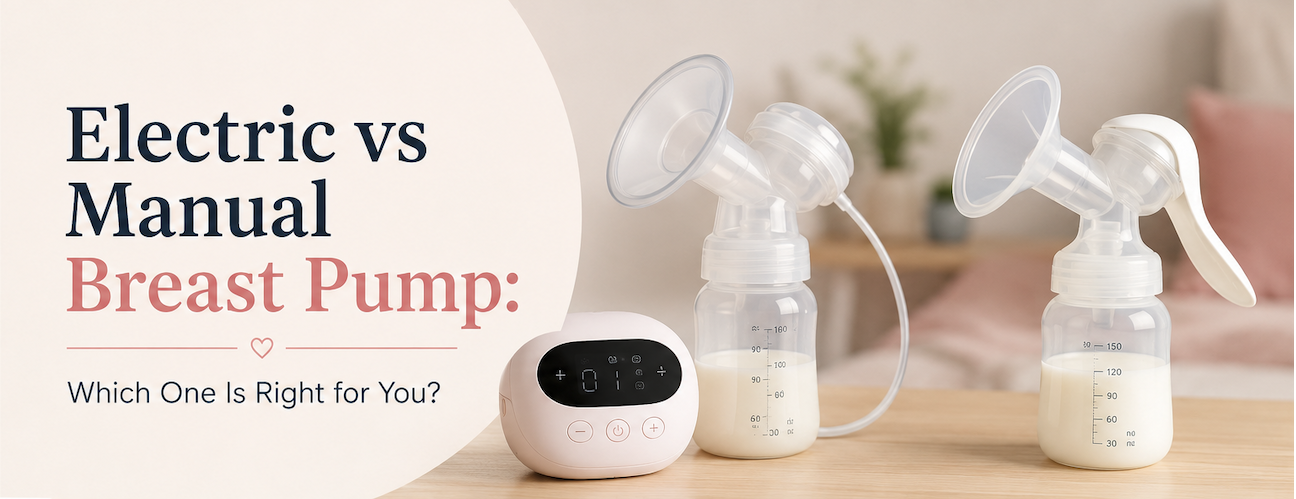
Breast pumps have become an essential tool for many breastfeeding mothers, whether they’re returning to work, exclusively pumping, or simply looking for greater flexibility in feeding their baby. Choosing the right pump can make expressing milk more comfortable and convenient while supporting individual breastfeeding goals.
One of the most common questions new parents ask is whether they should choose an electric breast pump or a manual breast pump. While both are designed to express breast milk, they differ in how they operate, the effort required, and the situations they’re best suited for.
There isn’t a single “best” option for every family. The right choice depends on your lifestyle, pumping frequency, budget, and personal preferences. Understanding the strengths and limitations of each type can help you make a confident and informed decision.
Understanding the Two Types of Breast Pumps
Manual Breast Pump
A manual breast pump is operated by hand using a lever or handle to create suction. Since it doesn’t require electricity or batteries, it’s lightweight, portable, and easy to use almost anywhere. Its simple design also makes it easy to clean and generally more affordable than electric models.
Manual pumps are often recommended for occasional pumping, relieving breast fullness, or keeping as a backup when traveling.
Electric Breast Pump
An electric breast pump uses a motor to create automatic suction cycles, reducing the physical effort required. Many models offer adjustable suction and speed settings to improve comfort and efficiency. They are available as single or double pumps, with many rechargeable and hospital-grade options designed for frequent use.
Electric pumps are generally recommended for mothers who pump regularly, return to work, or exclusively express milk.
Pros and Cons of Manual Breast Pumps
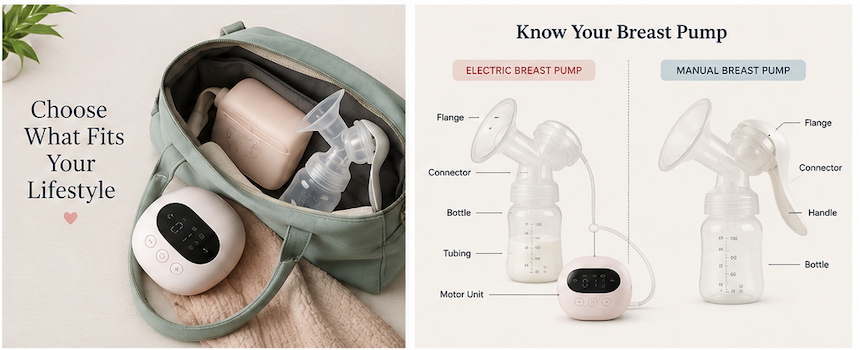
One of the biggest advantages of a manual breast pump is its affordability. It’s compact, quiet, and easy to carry in a handbag or diaper bag, making it ideal for travel or occasional use. Since it doesn’t require charging or power, it’s always ready whenever needed.
However, manual pumps require continuous hand effort, which can become tiring during longer pumping sessions. Milk expression is typically slower than with electric pumps, making them less suitable for mothers who pump multiple times each day or rely entirely on pumping to feed their baby.
For many parents, a manual pump works well as a convenient backup, even if they primarily use an electric model.
Pros and Cons of Electric Breast Pumps
Electric breast pumps are designed for speed, efficiency, and comfort. Their consistent suction patterns often help mothers express milk more quickly while reducing hand fatigue. Double pumping capability can also shorten pumping sessions and may help maintain milk supply for mothers who pump frequently.
Modern electric pumps often include features such as hospital-grade suction, rechargeable batteries, quiet motors, digital controls, memory settings, and closed-system hygiene to improve both convenience and cleanliness.
The main drawbacks are the higher upfront cost and the need to recharge or access a power source. Electric pumps also contain more components, which can require additional cleaning and maintenance.
Despite these considerations, they are often the preferred option for mothers who pump daily because they offer greater convenience and efficiency over time.
Electric vs Manual Breast Pump Comparison
Speed
An electric breast pump is generally faster because it provides automatic, consistent suction and often allows double pumping. Manual pumps require repeated hand movements, making milk expression slower, especially during longer sessions.
Comfort
Electric pumps reduce hand fatigue and often include adjustable suction settings that allow mothers to find a comfortable rhythm. Manual pumps offer greater control over suction but can become tiring when pumping frequently.
Portability
Manual breast pumps are lightweight and don’t require electricity, making them excellent for travel, outdoor activities, or emergencies. Electric pumps are also portable—especially rechargeable wireless models—but they typically take up more space and require occasional charging.
Noise
Manual pumps operate almost silently, making them ideal in quiet environments. Electric pumps produce some motor noise, although many modern models are designed to operate quietly enough for home or office use.
Cost
Manual pumps have a lower initial cost and fewer replacement parts. Electric pumps require a larger investment but can provide better long-term value for parents who pump every day due to their efficiency and time-saving features.
Ease of Cleaning
Manual pumps usually have fewer parts, making assembly and daily cleaning simple. Electric pumps may include more components, although many closed-system designs help reduce contamination risks and simplify maintenance.
Best for Different Parents
Manual breast pumps are well suited for occasional pumping, first-time mothers who want a backup pump, frequent travelers, and stay-at-home parents who only express milk occasionally.
Electric breast pumps are often the better choice for working mothers, parents who pump multiple times each day, or anyone exclusively pumping and looking to save time and effort.
Who Should Choose an Electric Breast Pump?
An electric breast pump is often recommended for mothers who pump several times a day, plan to return to work, or want to build a freezer stash of breast milk. It is also ideal for exclusive pumping, as faster sessions and consistent suction can make daily routines more manageable.
Parents who prefer minimal hand effort or need to express milk efficiently may also benefit from an electric pump. Features such as hospital-grade suction, rechargeable batteries, multiple pumping modes, and quiet operation can improve both comfort and convenience.
If you’re researching a modern option, the Best electric breast pump offers features including hospital-grade suction, a lightweight wireless design, quiet operation, multiple pumping modes, and a closed-system design. While every family’s needs are different, comparing these features can help you determine whether an electric pump fits your breastfeeding goals.
Common Mistakes When Choosing a Breast Pump
Many parents choose a breast pump based solely on price, but the cheapest option isn’t always the most suitable. It’s equally important to consider how often you’ll pump and whether the pump supports your daily routine.
Other common mistakes include overlooking proper flange sizing, choosing a basic manual pump for exclusive pumping, ignoring portability needs, forgetting to check the availability of replacement parts, and not considering noise levels if pumping at work or during nighttime sessions.
Breast Pump Comparison Table
| Feature | Manual Breast Pump | Electric Breast Pump |
| Power Source | Hand-operated | Electric/Battery |
| Pumping Speed | Slower | Faster |
| Effort Required | High | Minimal |
| Noise Level | Silent | Low to Moderate |
| Portability | Excellent | Good |
| Price | Lower | Higher |
| Best For | Occasional Pumping | Daily & Exclusive Pumping |
| Maintenance | Simple | Moderate |
| Suction Control | Manual | Adjustable |
| Overall Convenience | Moderate | High |
Frequently Asked Questions
Is an electric breast pump more effective than a manual pump?
For mothers who pump regularly, electric pumps are generally more efficient because they provide consistent suction and faster milk expression.
Which breast pump is better for working moms?
An electric breast pump is usually the preferred option because it saves time and supports frequent pumping during the workday.
Can a manual breast pump maintain milk supply?
Yes, if used consistently. However, mothers who exclusively pump often find electric pumps more practical for maintaining supply.
Is a manual breast pump good for travel?
Yes. Its lightweight design, silent operation, and lack of batteries make it an excellent travel companion.
Is there a single best breast pump for everyone?
No. The ideal pump depends on your lifestyle, pumping frequency, budget, and breastfeeding goals. Choosing the option that fits your routine is more important than selecting the most expensive model.